
 EN
EN
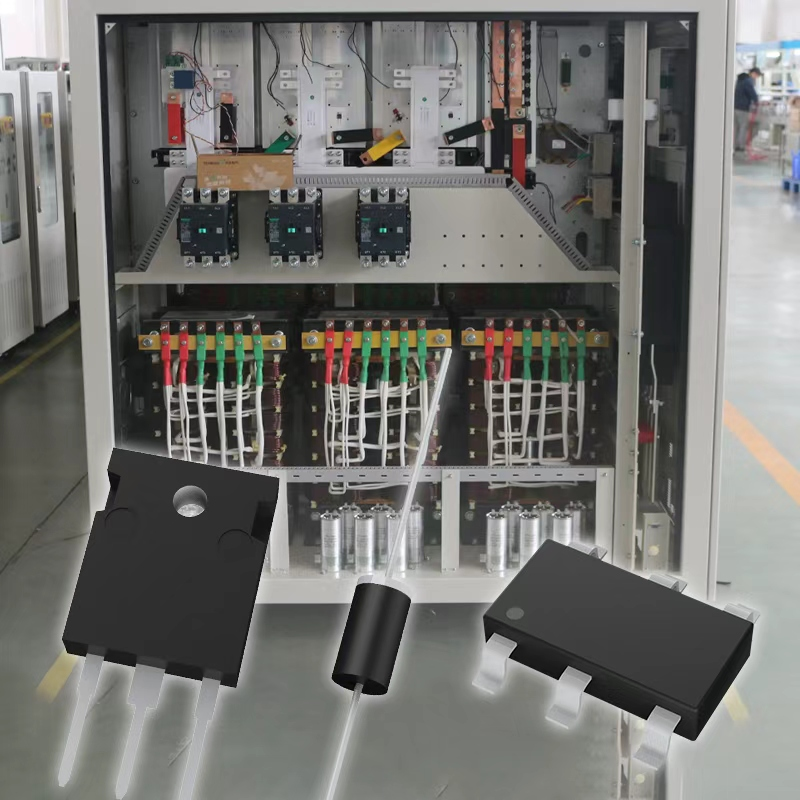
Understanding Diode Function and Key Characteristics in Power Conversion
Diode Function in Power Converters: The Foundation of Rectification
Diodes are essential for rectification in power conversion systems, enabling the transformation of alternating current (AC) to direct current (DC). Their unidirectional current flow blocks reverse voltages while allowing forward conduction, forming the core of AC-DC converters, battery chargers, and industrial power supplies where stable DC output is critical.
Key Diode Characteristics: Forward Voltage Drop, Reverse Voltage Tolerance, and Current Handling
Three primary parameters determine diode performance:
- Forward voltage drop (0.7V for silicon): Directly affects conduction losses and system efficiency
- Reverse voltage tolerance (50V to 10kV+): Defines maximum blocking capability
- Current-handling capacity (1A to 500A): Influences thermal design and component selection
Silicon carbide (SiC) diodes offer a forward drop of around 1.2V but operate efficiently at higher temperatures (up to 175°C), making them suitable for high-power, high-efficiency applications.
Unidirectional Current Flow and Its Impact on System Stability
Diodes work by allowing current to flow in just one direction, which stops unwanted backflow that might mess up voltage levels or harm other parts of the circuit. When solar inverters need to protect themselves from power failures, they rely on this property to disconnect photovoltaic panels safely. Similarly, modern USB-C chargers incorporate diodes to prevent accidental reverse charging situations that could damage devices. The reliability factor is what makes diodes so important for critical systems where failure isn't an option at all. Think about data centers running nonstop or life support machines in hospitals these applications simply cannot afford any electrical instability whatsoever.
Standard Rectifier Diodes vs. Fast Recovery Diodes: Switching Speed and Efficiency Comparison
Standard rectifier diodes are cost-effective and robust, ideal for low-frequency AC/DC conversion (below 1 kHz). They support currents up to 1,000 A and withstand reverse voltages over 5 kV, commonly used in battery chargers and welding systems. However, their long reverse recovery time (25–50 µs) leads to significant switching losses above 10 kHz.
Fast recovery diodes reduce recovery time to under 2 µs, minimizing switching losses in switch-mode power supplies (SMPS) and motor drives. Although they have a slightly higher forward voltage drop (1.1–1.5 V), their efficiency advantage in high-frequency operation justifies their use in modern power electronics.
Schottky Diodes in Low-Voltage, High-Frequency Power Conversion Applications
Schottky diodes utilize a metal-semiconductor junction to achieve low forward voltage drops (0.15–0.45 V), reducing conduction losses by up to 70% compared to standard silicon diodes. With negligible reverse recovery charge, they perform reliably at frequencies exceeding 1 MHz—ideal for DC/DC converters in solar microinverters and server power supplies.
Their trade-off is limited reverse voltage capability (typically < 200 V). The 1N5819 Schottky diode exemplifies this balance, delivering 1 A forward current with a 0.6 V drop at 40 V reverse voltage, supporting compact and efficient USB-C charging designs.
Zener Diodes for Voltage Regulation in Precision Power Supplies
Zener diodes work in what's called reverse breakdown mode, giving stable reference voltages ranging anywhere between 2.4 volts all the way up to 200 volts, usually with around plus or minus 5% tolerance. What makes these components so useful is their very sharp breakdown curve, which lets them regulate voltage pretty precisely even when there are changes in the input supply. Take a standard 12 volt Zener for example it can keep the output pretty much steady within about 0.1 volt difference even if the input swings from 14 volts to 18 volts. Because of this reliability, engineers often rely on Zeners in various analog circuit designs as well as in protection circuits that need to guard against unexpected voltage spikes in sensitive equipment.
Silicon Carbide Diodes (SiC-SBD and Super Junction SBD): Next-Generation Performance
The thermal performance of silicon carbide (SiC) diodes is really impressive, handling junction temps as high as 175 degrees Celsius while conducting heat three times better than regular silicon components. When it comes to Super Junction Schottky Barrier Diodes (SJ-SBDs), they pack some serious punch too. These little powerhouses manage recovery times under ten nanoseconds and can block voltages up to 1200 volts. That kind of spec sheet translates into around 99 percent efficiency when used in those 5 kilowatt electric vehicle charging stations we see popping up everywhere. What makes this technology so valuable? Well, industrial motor drives need significantly less cooling now thanks to these parts cutting down on heat generation by about forty percent. Plus, they allow for switch rates over 100 kilohertz which matters a lot for making smaller, more efficient inverters in renewable energy systems.
Key Feature Comparison
| Diode Type | Forward Voltage | Switching Speed | Voltage Range | Best Applications |
|---|---|---|---|---|
| Standard Rectifier | 0.7–1.1 V | <3 kHz | 50 V–5 kV | Line-frequency power supplies |
| Fast Recovery | 1.1–1.5 V | 10–100 kHz | 200 V–1.2 kV | SMPS, UPS systems |
| Schottky | 0.15–0.45 V | >1 MHz | <200 V | DC/DC converters, RF circuits |
| SiC-SBD | 1.2–1.8 V | 50–500 kHz | 600 V–1.7 kV | EV chargers, solar inverters |
Table 1: Performance characteristics of diode types in power conversion systems (Source: Industry Standard Specifications 2023)
Improving Power Conversion Efficiency with Advanced Diode Technologies
Reducing Forward Voltage Loss with Schottky and SiC Diodes to Boost Efficiency
The forward voltage drop has a direct impact on conduction losses within power systems. Regular silicon diodes tend to waste around 0.7 to 1.1 volts, but things get better with Schottky versions that bring those losses down to just 0.3 to 0.5 volts. And if we go one step further with SiC Schottky Barrier Diodes (SBDs), performance gets even better than that. For applications where lots of current is flowing, like in server power supplies for example, these small voltage savings really add up. We're talking about saving anywhere from 15 to 30 watts per individual diode, which makes a big difference when looking at the overall system efficiency over time.
Minimizing Switching Losses Through Optimized Reverse Recovery Characteristics
As frequency goes up, so do switching losses because of something called reverse recovery current, which is basically that brief surge when all the stored charge disappears. Fast recovery diodes help control this problem since they can recover within about 50 to 100 nanoseconds. But there's another option altogether with SiC-SBDs that actually gets rid of the issue completely through their unipolar conduction properties. When we tested this out by swapping out regular silicon fast recovery diodes for these new SiC-SBDs in a 500 kHz DC-DC converter setup, the results were pretty impressive. Switching losses dropped around 60 percent, which means better efficiency overall and much less heat buildup in the system components.
Case Study: Efficiency Gains in a 500W Server Power Supply Using SiC-SBDs
Switching out traditional silicon diodes for those made of silicon carbide (SiC-SBDs) in both the PFC and output sections of a 500 watt AC to DC power supply unit for servers boosted overall efficiency numbers from around 90.5 percent all the way up to 92 percent. What makes this work so well? Well, these new components have much lower forward voltage drop plus almost no recovery current during operation. That combination cuts down on energy waste by approximately 23 watts total, and gets rid of about 15 degrees Celsius worth of heat buildup across various parts inside the system. Getting closer to that elusive 80 Plus Titanium certification is now within reach thanks to this improvement. Remember, data centers need power supplies that hit at least 94% efficiency according to those standards, so every percentage point counts when designing for tomorrow's computing infrastructure needs.
Critical Applications of Diodes in Power Supplies and Charging Systems
Output Rectification and Filtering for Clean DC Output in AC-DC Converters
AC to DC conversion works when diodes take alternating current and turn it into what's called pulsating direct current. Capacitors and inductors then do their job smoothing out those pulses so we get stable DC at the end. The newer fast recovery diodes actually cut down on energy loss during this process. Tests show around a 22 percent improvement in efficiency for 1 kilowatt power supplies over regular ones. This matters a lot because sensitive equipment like medical gear and internet connected devices need really clean power to function properly without interference or damage.
Diode Use in Mobile Device Chargers: Balancing Size, Cost, and Efficiency
Schottky diodes work really well in compact mobile chargers because they have this lower forward voltage drop around 0.3 volts instead of the usual 0.7 volts found in other types. This means less heat builds up inside these small devices where every millimeter counts. The efficiency numbers are pretty impressive too some tests show around 95 percent efficiency for those 20 watt USB C chargers on the market today. And when it comes to printed circuit boards, we're talking about cutting down the space needed by roughly 30 percent compared to older bridge rectifier setups. For engineers working on these designs, balancing factors like dynamic resistance against thermal management becomes critical. They need to make sure everything stays reliable without breaking the bank, since consumers still expect affordable prices even as technology advances.
Preventing Backflow Current in Battery Charging Circuits With Blocking Diodes
Blocking diodes stop batteries from losing power backwards by keeping current flowing only one way. For lithium ion packs specifically, these components can save around 8 percent of stored energy since they block unwanted drain from unused connections. When paired with MOSFETs in what's called an OR configuration, the system loses just about 0.1 volts during operation. This matters a lot for backup power supplies where smooth transitions between power sources are critical. The setup also meets important safety requirements outlined in the IEC 62133 standard that applies to many everyday electronic devices we rely on daily.
FAQ Section
What is the primary function of a diode in power converters?
Diodes are primarily used for rectification in power converters, transforming alternating current (AC) to direct current (DC) by allowing unidirectional current flow, which is crucial for stable DC output in applications like AC-DC converters and battery chargers.
What are the main characteristics of diodes?
The main characteristics of diodes include forward voltage drop, reverse voltage tolerance, and current-handling capacity, which significantly affect their performance in power conversion systems.
How do Schottky diodes compare to standard silicon diodes?
Schottky diodes have a lower forward voltage drop compared to standard silicon diodes, reducing conduction losses by up to 70%, but they generally have a limited reverse voltage capability.
Why are silicon carbide (SiC) diodes advantageous?
Silicon carbide diodes offer higher thermal efficiency, can handle higher voltages, and significantly reduce switching losses, making them ideal for high-power and high-efficiency applications.
Table of Contents
- Understanding Diode Function and Key Characteristics in Power Conversion
- Standard Rectifier Diodes vs. Fast Recovery Diodes: Switching Speed and Efficiency Comparison
- Schottky Diodes in Low-Voltage, High-Frequency Power Conversion Applications
- Zener Diodes for Voltage Regulation in Precision Power Supplies
- Silicon Carbide Diodes (SiC-SBD and Super Junction SBD): Next-Generation Performance
- Improving Power Conversion Efficiency with Advanced Diode Technologies
- Critical Applications of Diodes in Power Supplies and Charging Systems
- FAQ Section