
 EN
EN
How Schottky Diodes Enable 50% Higher Switching Efficiency
The Growing Demand for Power Efficiency in Modern Electronics
Power efficiency has become a major focus for modern electronics across pretty much every industry these days. Think about it: smartphones need batteries that last all day, data centers are constantly looking ways to cut down on those expensive cooling bills, and electric cars must manage their limited charge better than ever before. All this creates real pressure on engineers to reduce those annoying switching losses in power circuits. Traditional PN diodes just aren't cutting it anymore because they come with built-in problems. They drop around 0.7 volts when conducting current and take extra time to switch off completely, which wastes precious energy. With global spending on electronic power reaching nearly half a trillion dollars each year according to the IEA report from 2023, even small improvements in efficiency can translate into massive savings over time for companies big and small.
Core Principle: Unique Schottky Diode Structure and Unipolar Operation
Schottky diodes achieve superior performance through their metal-semiconductor junction architecture. Unlike PN diodes—where electron-hole recombination causes delays—Schottky devices operate via unipolar conduction, using only majority carriers (electrons). This eliminates minority carrier storage time, enabling:
- Forward voltage drops as low as 0.15V—0.45V
- Near-instantaneous switching transitions
- Minimal heat generation during operation
The absence of a depletion layer allows direct carrier transport across the Schottky barrier, reducing conduction losses by up to 70% compared to silicon diodes (IEEE Transactions 2022).
Real-World Impact: Case Study on DC-DC Converters Achieving 50% Efficiency Gains
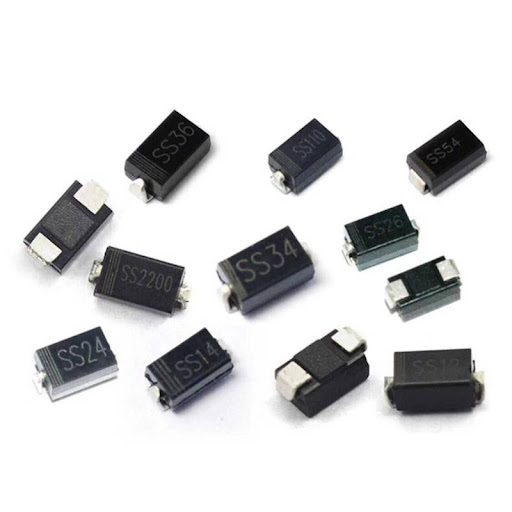
In DC-DC buck converters for server power supplies, replacing standard diodes with Schottky variants delivers measurable benefits. A 2023 test comparing 12V—5V conversion modules showed:
| Metric | Standard Diode | Schottky Diode | Improvement |
|---|---|---|---|
| Power Loss | 3.2W | 1.6W | 50% |
| Switching Delay | 35ns | <2ns | 94% |
| Peak Temperature | 78°C | 62°C | 16°C |
This leap stems from Schottky diodes’ near-zero reverse recovery time and low VF, enabling higher-frequency operation with dramatically reduced switching losses. The resulting energy savings translate to $740k annual cost reductions per 10,000-server deployment (Ponemon 2023), validating their role in sustainable power design.
Low Forward Voltage Drop and Reduced Conduction Losses
Understanding the Low Vf Advantage in Schottky Diodes
Schottky diodes have much lower forward voltage drop compared to regular silicon diodes. The VF ranges around 0.15 to 0.45 volts instead of the typical 0.7 volts we see with silicon options. This happens because they work differently at the junction between metal and semiconductor materials, plus they operate with just one type of charge carrier. When dealing with power hungry systems such as those converting 48 volts down to 12 volts, these lower voltages mean less energy gets wasted during operation. The math works out pretty straightforwardly too Ploss equals current multiplied by voltage drop. Let's put numbers to it: swapping out standard silicon parts for Schottkys can slash rectification losses from seven watts down to three watts when handling ten amp loads. That might not sound like much until you realize it improves overall system efficiency by about two and a half percent points. Small gains like that matter a lot in real world applications where every bit counts toward longer battery runtime and cooler operating temperatures.
Minimizing Conduction Losses in Power Conversion Circuits
The almost straight line relationship between voltage and current means these components perform consistently even when temperatures change. Putting them in buck converters or voltage regulators really helps because their low forward voltage cuts down on voltage drops and saves energy that would otherwise go to waste. For systems handling large currents, cutting VF by about 10% actually results in around 15% fewer conduction losses according to research in power semiconductors. This improvement allows for denser power designs, better system reliability over time, and meets those tough energy efficiency requirements that many industries face today.
Near-Zero Reverse Recovery Time for Faster Switching Performance
Eliminating Transition Losses in Switch-Mode Power Supplies (SMPS)
Schottky diodes get rid of those pesky minority carrier storage charges that are basically a big problem for regular PN junction diodes, which gives them almost zero reverse recovery time. This makes them great for switching applications when the polarity changes in SMPS circuits. When the power switch gets turned off, these diodes stop reverse current right away without any lag time. That helps prevent those annoying voltage spikes and cuts down on switching losses by around 40 percent in high frequency DC to DC converters. Systems using Schottky diodes tend to run cooler overall and just work better in general. Many engineers have noticed this improvement in their designs over the years.
Schottky vs. PN Junction Diodes: Superior Speed in High-Frequency Applications
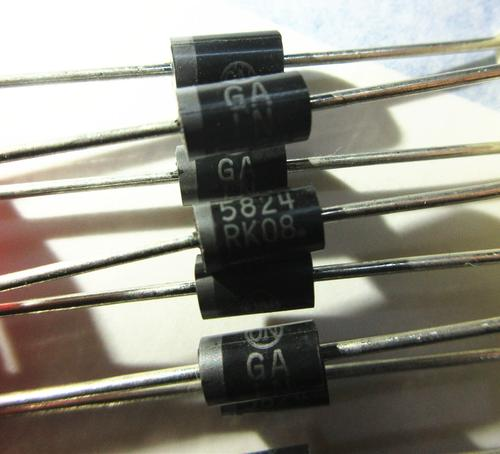
PN diodes take extra time to deal with stored charges during operation, whereas Schottky diodes work differently by relying mainly on quick electron movement. This allows for much faster transitions, sometimes going beyond 100 kHz without those annoying energy losses from recovery periods. When running at around 50 kHz, typical PN diodes actually waste between 5 to 10 percent of their energy because of this reverse recovery issue. Meanwhile, Schottky versions keep over 95 percent efficiency even at these same frequencies. Because they respond so quickly, these diodes have become essential components in power supplies for servers and charging stations for electric vehicles where frequencies often exceed 200 kHz. The speed difference really matters when dealing with high frequency operations.
Key Applications in Power-Sensitive and Portable Electronics
Optimizing Battery-Powered Devices and SMPS with Schottky Diodes
Schottky diodes really boost efficiency in devices that care about power consumption because they have both low forward voltage drop and almost no reverse recovery time. When we look at things like smartwatches or environmental sensors, these diodes cut down on wasted energy when converting power, which means batteries last longer between charges. Take those tiny phone chargers and switch mode power supplies for example. Since Schottky diodes don't store minority carriers, there's less energy lost during those rapid switching cycles at high frequencies. This leads to maximum efficiency while generating less heat overall. The benefit here is huge for products where space matters most. Traditional components just can't handle the heat dissipation requirements in such tight spaces, making Schottky diodes practically indispensable in modern compact electronics design.
Next-Generation Materials: Silicon Carbide (SiC) Schottky Diodes
Rising Adoption of SiC Schottky Diodes for Extreme Efficiency and Thermal Performance
Silicon Carbide (SiC) Schottky diodes offer some serious benefits when compared to traditional silicon alternatives. The material's wide bandgap allows for much higher breakdown voltages, reaching around 1700 volts in many cases. Plus, these components handle heat really well thanks to their excellent thermal conductivity properties, so they can keep running even when temperatures climb past 200 degrees Celsius. This means engineers don't need to worry about elaborate cooling systems in compact power electronics designs. What makes SiC truly stand out though is its almost nonexistent reverse recovery time. When switching at high frequencies, this characteristic cuts down on those pesky energy losses that plague conventional diodes. That's why we're seeing more manufacturers turn to SiC technology for things like electric vehicle charging systems and factory automation equipment, where every bit of efficiency saved translates into real money on the bottom line for businesses.
Strategic Integration of Advanced Schottky Diodes in Future Power Systems
Modern power systems are starting to pack SiC Schottky diodes right alongside MOSFETs in those co-packaged modules we see so much these days. This setup cuts down on those pesky parasitic inductances and really cranks up the power density, which makes all the difference for things like solar inverters and those massive data center power supplies. As components get smaller and smaller, we're seeing these SiC solutions pop up everywhere from handheld gadgets to IoT sensors too. After all, when every cubic millimeter counts in compact devices, getting the most bang for your buck in terms of efficiency becomes absolutely critical. Looking ahead, it's pretty clear that silicon carbide tech is going to be at the heart of our evolving smart grid networks and the broader push toward electrification across industries.
FAQ
What are Schottky diodes?
Schottky diodes are semiconductor devices known for their low forward voltage drop and fast switching capabilities compared to traditional PN diodes.
How do Schottky diodes improve efficiency?
They improve efficiency by reducing power loss through minimal voltage drops and eliminating reverse recovery time, leading to faster and more efficient switching.
Where are Schottky diodes commonly used?
Schottky diodes are commonly used in power-sensitive and portable electronics such as smartphones, smartwatches, switching power supplies, and electric vehicle chargers.
What advantages do SiC Schottky diodes offer?
Silicon Carbide (SiC) Schottky diodes offer advantages like higher thermal performance, higher breakdown voltages, and minimal reverse recovery time.
Table of Contents
- How Schottky Diodes Enable 50% Higher Switching Efficiency
- Low Forward Voltage Drop and Reduced Conduction Losses
- Near-Zero Reverse Recovery Time for Faster Switching Performance
- Key Applications in Power-Sensitive and Portable Electronics
- Next-Generation Materials: Silicon Carbide (SiC) Schottky Diodes
- FAQ