
 EN
EN
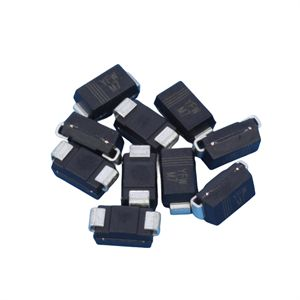
How TVS Diodes Work: Avalanche Breakdown and ESD Protection Mechanism
Avalanche breakdown response to transient overvoltage events
TVS diodes work by using controlled avalanche breakdown at their P-N junctions to safeguard electronic circuits. Normally these devices sit there doing nothing much, basically just sitting around with high resistance so they don't interfere with regular operations. But when something goes wrong and voltage spikes beyond what's safe, the diode kicks into action almost instantly. Within trillionths of a second, it creates this shortcut path that pulls dangerous electrical surges away from delicate parts in the circuit. What makes this whole thing remarkable is how consistently reliable it stays even after repeated use over time. According to industry standards like IEC 61000-4-2, modern TVS diodes can handle everything from static shocks generated by people touching equipment (up to plus or minus 8 kilovolts) all the way to massive power surges caused by nearby lightning strikes. Their effectiveness comes down to clever engineering of the semiconductor junction combined with incredibly fast reaction speeds under 0.5 nanoseconds.
Real-time clamping action during ESD and surge events
When activated, the TVS diode goes into what's called clamping mode. Basically, it restricts the voltage on protected circuits to a safe level that we call the clamping voltage or VCL for short. This happens really fast right after the breakdown point is reached. The diode then directs excess surge energy safely to ground while keeping the voltage downstream from going beyond what the connected integrated circuits can handle. Most modern logic components have an upper limit around 20 volts or less. After dealing with the surge, the TVS diode quickly recovers and goes back to its normal high resistance state. This prevents dangerous conditions like latch-up situations or overheating problems. Studies indicate that when TVS protection is implemented correctly, it cuts down on electrostatic discharge issues in consumer devices by more than half. That makes TVS protection not just important but actually essential for maintaining reliable operation in electronic systems.
Critical TVS Diode Parameters: Breakdown, Clamping, and Standoff Voltage
Understanding three voltage specifications–VBR (Breakdown Voltage), VCL (Clamping Voltage), and VWM (Working Voltage/Standoff)–is essential for robust transient protection.
Interpreting VBR (breakdown), VCL (clamping), and VWM (standoff) in datasheets
The Voltage Working Maximum (VWM) basically tells us what's the highest reverse voltage a diode can handle before we start seeing noticeable leakage currents. Think of it as the safety limit line that shouldn't be crossed. Then there's Voltage Breakdown Rating (VBR), which usually sits about 10 to 15 percent higher than VWM. This is when the diode starts conducting electricity in avalanche mode. For practical purposes, Voltage Clamp Level (VCL) matters most because this shows exactly what kind of peak voltage gets passed along to whatever circuits are being protected during surges like 1 amp or even 10 amps. Real world testing proves this number really matters. Most engineers know they need to keep VCL well under the max voltage specs for those downstream integrated circuits. Why? Because when designers ignore this rule, bad things happen. According to data from the Electronics Reliability Quarterly last year, around two thirds of all field failures at input/output interfaces come down to this exact issue.
| Parameter | Purpose | Design Rule |
|---|---|---|
| VWM | Normal operation guardrail | ≈ Circuit operating voltage |
| VBR | Trigger point for protection | ≈ Protected component’s breakdown limit |
| VCL | Actual protection level | ≈ Absolute maximum rating of downstream ICs |
Why low clamping voltage and fast response time (<1 ns) matter for circuit protection
Getting low VCL right matters a lot. Take a microcontroller designed for 8 volts - it simply won't work properly when exposed to 10 volts clamping, no matter how good the VBR and VWM specs look on paper. Speed is another big deal factor here. Those ESD pulses hit their peak current within less than one nanosecond, which means components that take longer than 5 ns to respond (like some varistors) let harmful voltage spikes through before they even kick in. According to tests from the ESD Association last year, TVS diodes that react faster than 500 picoseconds and have better VCL characteristics cut down board failures by around three quarters compared to standard suppression devices. That kind of improvement makes all the difference in protecting sensitive electronics during those brief but brutal electrical surges.
Bidirectional vs Unidirectional TVS Diodes: Selection Guidelines for Common Interfaces
TVS diodes come in two main flavors: unidirectional and bidirectional, each designed for specific signal environments. The unidirectional ones work by clamping voltage spikes in just one direction, which makes them great for DC circuits. Think about things like USB ports or car electronics where power surges tend to go above a certain level repeatedly. On the flip side, bidirectional TVS diodes handle both positive and negative voltage spikes equally well. These are really important when dealing with AC signals or any system where electricity can flow both ways. We see these used all the time in telephone lines, audio equipment connections, and those complex CAN bus networks in modern vehicles.
When choosing between different diode types, polarity sensitivity stands out as a major factor. Unidirectional diodes need to be placed correctly with specific orientation, while their bidirectional counterparts give designers much more freedom when laying out circuits. Take USB 2.0 and 3.0 data lines for instance they work better with bidirectional arrays since they deal with noise coming from both directions at once. Power rails on the other hand typically stick with unidirectional diodes because they provide good protection without breaking the bank. Both options respond at similar speeds down to picoseconds, though there's a difference in how they're built inside. Standard unidirectional models have just one P-N junction, whereas bidirectional ones combine two junctions back to back in what engineers call series opposition configuration.
| Feature | Unidirectional TVS Diode | Bidirectional TVS Diode |
|---|---|---|
| Voltage Clamping | Single polarity (e.g., positive surges only) | Both positive and negative polarities |
| Polarity Sensitivity | High; requires correct circuit orientation | Low; can be installed in either direction |
| Construction | Single P-N junction | Two back-to-back P-N junctions |
| Primary Applications | DC circuits (USB ports, automotive electronics) | AC circuits or bidirectional signals (telecom data lines, audio interfaces) |
| Typical Cost | Lower | Higher |
| Response Time | Fast (picoseconds) | Fast (picoseconds) |
Optimizing TVS Diode Implementation: PCB Layout and USB Interface Protection Best Practices
Strategic placement near I/O connectors and minimizing parasitic inductance
Where TVS diodes get placed really matters. They should be positioned super close to those I/O connectors, preferably no more than 5mm away, so they can catch those pesky transients before they even reach the circuit board. When traces get too long, they start causing problems with parasitic inductance, which actually raises the clamping voltage during those fast nanosecond events. We're talking about an increase of around 1.5 to 2 volts for each extra millimeter added. For best results, go with wide, straight traces at least 20 mil thick. Connect that ground pin directly to a good quality, low inductance ground plane instead of relying on daisy chains or sharing it with other noisy digital components. And remember to steer clear of right angle bends and unnecessary vias along the protection path. These little details make all the difference when it comes to maintaining signal integrity and getting that quick, reliable clamping action we need.
Designing robust USB 2.0/3.0 protection with TVS diodes
Special care is needed when working with USB interfaces. When dealing with USB 3.0's impressive 5 Gbps speed, engineers need to pick TVS arrays with really low capacitance below 0.5 pF per line to keep signals clean and prevent those annoying eye diagram issues. The right components matter too - look for bidirectional diodes that can handle at least 5 volts while keeping clamping voltage under 9 volts. This protects both sides of the connection from damage. Grounding strategy is another key factor. Star grounding works best here, connecting all TVS grounds straight to either a dedicated chassis or separate analog ground plane. This setup helps stop ground bounce problems during those sudden ESD surges. With USB-C ports becoming so common these days, it makes sense to combine differential line protection with specific CC line suppressors. They tackle both data transfer spikes and power delivery fluctuations. Most importantly, testing according to IEC 61000-4-2 Level 4 standards (which means surviving an 8 kV contact discharge) shows this method keeps USB 3.0 running at full speed while still standing up to electrostatic threats.
FAQ
What is the main function of TVS diodes?
TVS diodes protect electronic circuits by using controlled avalanche breakdown at their P-N junctions to capture and redirect voltage spikes away from sensitive components.
How quick is the response time of TVS diodes?
TVS diodes react in less than 0.5 nanoseconds, providing immediate protection during transient overvoltage events.
What are the differences between unidirectional and bidirectional TVS diodes?
Unidirectional TVS diodes are suited for DC circuits and clamp voltage spikes in a single direction, while bidirectional ones manage voltage spikes from both directions in AC signal environments.
Why is the placement of TVS diodes important on PCB layout?
TVS diodes should be close to I/O connectors to minimize the effects of parasitic inductance and quickly capture transient voltage spikes, ensuring effective circuit protection.
Table of Contents
- How TVS Diodes Work: Avalanche Breakdown and ESD Protection Mechanism
- Critical TVS Diode Parameters: Breakdown, Clamping, and Standoff Voltage
- Bidirectional vs Unidirectional TVS Diodes: Selection Guidelines for Common Interfaces
- Optimizing TVS Diode Implementation: PCB Layout and USB Interface Protection Best Practices
- FAQ