
 EN
EN
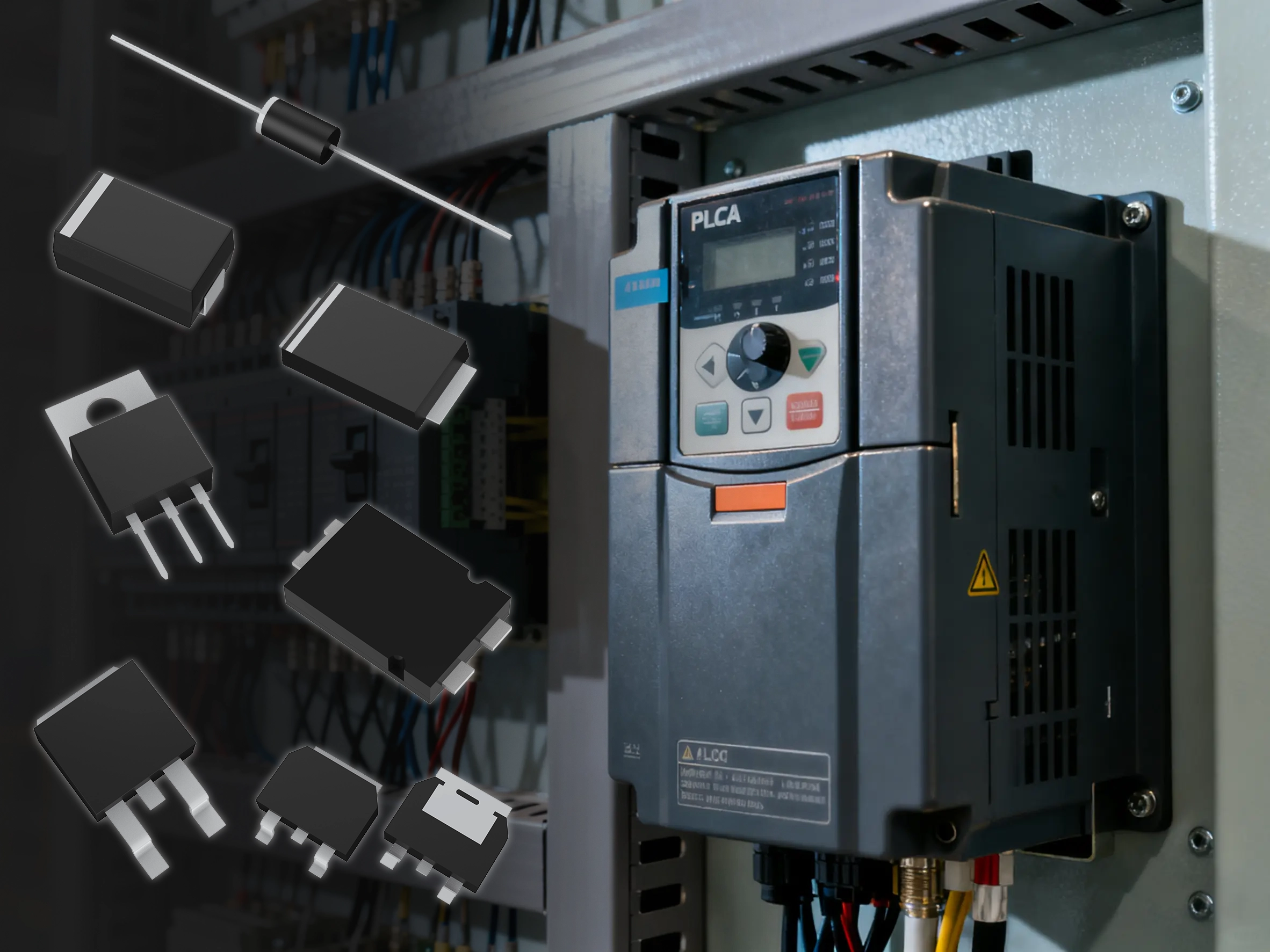
Reducing Conduction Losses with Low Forward Voltage Drop
Understanding Energy Loss in Conventional PN Junction Diodes
Standard PN junction diodes usually have forward voltage drops ranging from about 0.6 to 1.0 volts, which causes quite a bit of wasted energy when handling large currents. Take for example a regular silicon diode that drops around 0.7 volts across it. At 10 amps of current flow, this translates into roughly 7 watts being lost as heat alone. According to research published by TrrSemicon back in 2023, these kinds of losses can actually account for nearly a third of all power losses in certain 48 volt power systems. What makes this problem worse is how these losses happen because electrons and holes keep recombining within the PN junction itself. This becomes particularly bad news for circuits operating at lower voltages since even tiny reductions in voltage across components can seriously cut down on overall system efficiency.
How Schottky Diodes Minimize Conduction Losses Through Lower Forward Voltage
Schottky diodes work with metal semiconductor junctions and can get forward voltages down to around 0.3 volts. That's actually about 57 percent lower than what we see with regular PN diodes. The lower voltage means less energy gets lost when they conduct electricity. A study from last year looked at how efficient different components were and found something pretty impressive. When engineers swapped out silicon diodes for Schottky ones in DC to DC converters, they saw nearly 58% fewer losses during the rectification process. Another big plus is that these diodes don't store any minority carriers, so there are no reverse recovery losses when they switch states. This makes them particularly useful in applications where fast switching is required.
Impact on Power Dissipation and Heat Generation in Circuit Design
Schottky diodes consume less power which means they generate less heat overall. This reduction cuts down on the need for heatsinks by around 40% when compared to traditional PN diode setups. For automotive applications specifically, we see junction temperatures drop by about 15 degrees Celsius at 5 ampere loads, something that makes these components last longer in vehicle systems. The thermal advantages also give engineers more flexibility to design smaller power supplies that still achieve efficiencies over 90% without needing fans or other active cooling methods.
Quantifying Efficiency Gains: Schottky vs. PN Diodes in Real-World Circuits
Tests indicate that Schottky diodes can boost system efficiency between 2.5 to 4 percent in 12 volt rail applications compared to those pesky ultrafast PN diodes. Take a standard 100 watt power supply for example it runs at around 93 percent efficiency when using Schottky rectifiers, whereas silicon diodes only manage about 89 percent. That translates to roughly 15.6 kilowatt hours saved every year if running continuously. Things get even better in higher frequency systems above 100 kilohertz. Traditional diodes start losing their edge here as both switching and conduction losses climb dramatically, making them less suitable for these demanding applications.
Case Study: Enhanced Efficiency in Power Supplies and DC-DC Converters
In a telecom infrastructure upgrade, 48V rectification modules incorporating Schottky diodes reached 96% efficiency—a 3.2-point gain over prior designs. The 0.32V forward voltage enabled 22% smaller magnetics and eliminated forced-air cooling in 300W units, reducing annual energy costs by $18,000 per site while maintaining 99.9% uptime in 5G base stations.
Minimizing Switching Losses Through Fast Recovery Characteristics
Role of fast switching speed in reducing switching losses at high frequencies
Schottky diodes have these really short reverse recovery times, usually below 100 nanoseconds. That's about 50 to 100 times quicker compared to regular PN diodes. Because of this speed, they waste much less energy when there are sudden changes in voltage. The quick response time means the diode stops conducting almost immediately when the polarity switches directions. Tests show that this can cut down on those temporary power losses by around 30 something percent in DC-DC converters running at frequencies over 100 kHz. A bunch of studies on switch mode power supplies back this up, though exact numbers vary depending on the specific application.
Performance comparison with slow-recovery PN diodes in PWM and SMPS applications
When it comes to PWM motor drives, Schottky diodes actually cut down on switching losses by around 40% compared to those old school slow recovery PN diodes. Recent research from 2023 looked at buck converters and discovered something interesting - when using Schottky diodes, these systems hit efficiency peaks around 92%, while the PN versions only managed about 85%. And get this, the difference between them gets even bigger once we start talking frequencies above 500 kHz. This fast acting nature makes them really useful for telecom power systems where maintaining tight voltage control matters a lot. Think about cell towers needing stable power supply without fluctuations messing up signal quality.
Growing adoption in switch-mode power supplies due to efficiency demands
Driven by global energy regulations like EU Lot 9, Schottky diodes are now used in 68% of sub-1kW SMPS designs. Verified Market Research forecasts a 25% CAGR for high-speed diodes in renewable energy systems through 2028, as manufacturers leverage their superior thermal performance to design compact, fanless adapters.
Enabling Energy-Efficient Low-Voltage and Battery-Powered Systems
Voltage headroom challenges in modern low-voltage electronics
When electronics start operating at these lower voltages around 1.8V and 3.3V, those old fashioned PN diodes become problematic because they eat up about 0.7V just sitting there. Schottky diodes fix this issue pretty well, saving somewhere between 30 to 50 percent of that precious voltage space since their forward drop sits closer to 0.3V instead. The difference matters a lot when batteries are running low. For things like pacemakers or other implantable medical devices, even tiny changes matter. Studies indicate that if voltage fluctuates by more than 1%, it starts messing with how accurate those sensors inside actually read what's going on in the body. That kind of precision isn't just nice to have it's absolutely necessary for reliable patient monitoring.
Optimizing portable device performance using Schottky rectification
The low forward voltage drop and quick switching characteristics of Schottky diodes mean they cut down on rectification losses in portable devices by around 40%. According to research published in 2022 on power efficiency, smartphones that use these diodes in their charging circuits hit an impressive 94% energy conversion rate, whereas traditional PN diodes only manage about 86%. What does this actually mean for consumers? Thinner phones without those annoying heat sinks sticking out, all while keeping processors running strong even when handling intensive operations such as streaming over 5G networks or running graphics heavy apps.
Design strategies for maximizing battery life with Schottky diodes
To extend battery runtime, engineers employ three key strategies:
- Selecting diodes with <0.4V forward voltage at operating currents
- Balancing reverse leakage (<100µA) against switching frequency needs
- Implementing duty cycle control in power-gated circuits
Field tests show these approaches extend lithium-ion battery life by 15–20% in industrial PDAs, highlighting the role of Schottky diodes in energy-constrained environments.
Enhancing Power Conversion and Renewable Energy Applications
Efficient power rectification in AC-DC and DC-DC conversion topologies
Schottky diodes boost performance in both AC-DC and DC-DC power systems because they cut down those pesky voltage drops when converting electricity. Research into newer converter designs indicates these diodes can actually make things run about 12 to 15 percent better compared to regular PN junction diodes, particularly noticeable in buck/boost configurations working at frequencies above 100 kHz according to recent work published by IntechOpen back in 2024. What makes them so effective is their low forward voltage drop around 0.3 to 0.4 volts even when handling substantial currents up to 10 amps, which means less wasted energy throughout the entire voltage conversion process.
Preventing reverse current in solar panels: Schottky diodes in photovoltaic systems
In solar arrays, Schottky diodes block reverse current flow during low-light conditions, reducing nighttime energy loss by up to 72% compared to unprotected setups. Their fast response (<50ns) to shading events protects cells from hot-spot heating while preserving 98.5% of daily energy output (Solar Energy Journal 2023).
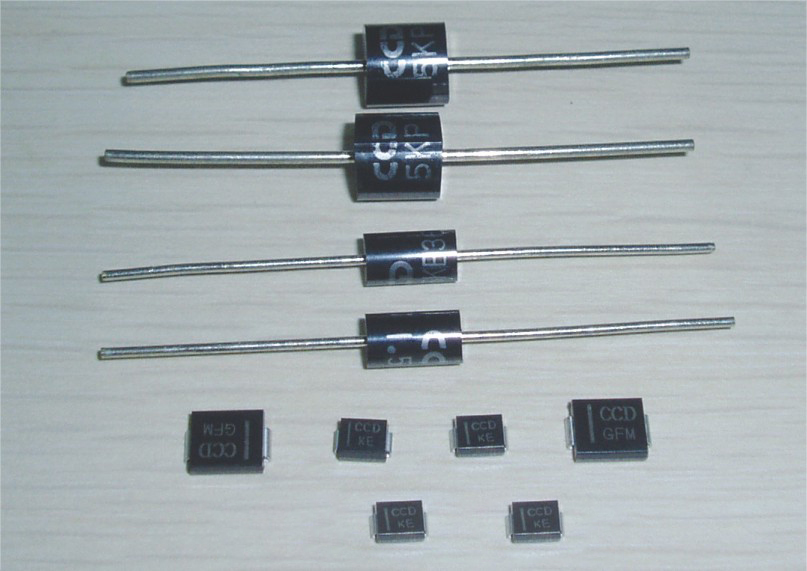
Use of Schottky diodes as bypass diodes in solar cell arrays
When integrated as bypass diodes in 60-cell modules, Schottky variants reduce power loss from partial shading by 40–60%. Their low thermal resistance (1.5°C/W) supports continuous operation at 85°C ambient without derating, making them ideal for utility-scale installations where long-term reliability outweighs minor increases in leakage current.
Balancing efficiency gains against leakage current trade-offs
Although Schottky diodes have 2–5x higher reverse leakage than silicon diodes, modern designs mitigate this through:
- Temperature-compensated barrier engineering (-0.02mV/°C coefficient)
- Guard ring structures that reduce edge leakage by 80%
- Selective epi-layer doping to optimize VF/IR balance
These advancements enable 94% system efficiency in MPPT charge controllers despite 100µA leakage at 25°C (Renewable Energy Focus 2024).
Lower Thermal Stress Due to Reduced Power Loss in Schottky-Based Circuits
Schottky diodes actually waste about half as much power as regular PN diodes because they have this really low forward voltage drop around 0.3 to 0.4 volts instead of the usual 0.7 to 1.1 volts we see in traditional ones. What does this mean? Less heat generated too. At 10 amps current flow, these Schottkys only produce between 3 and 5 watts of heat, whereas silicon based diodes put out anywhere from 7 to 11 watts according to recent studies published in Power Electronics Journal last year. Because there's not so much heat buildup, these components can run reliably even when temperatures reach 125 degrees Celsius without needing any performance adjustments. This makes them ideal for situations where things get hot inside sealed boxes or under the hood of cars where excessive heat would normally cause problems over time.
Opportunities for Compact Designs: Smaller Heatsinks and Higher Power Density
By reducing power losses by 40%–60%, Schottky diodes cut heatsink mass requirements by 30%–50% in DC-DC converters. Designers can therefore:
- Replace aluminum heatsinks with lighter stamped steel or polymer composites
- Increase power density from 8W/in³ to 12W/in³ in server PSUs
- Eliminate active cooling in sub-100W portable devices
These advantages support next-generation IoT sensors and wearables, where PCB space constraints demand components under 5mm in height.
FAQs
What are conduction losses in diodes?
Conduction losses refer to the energy lost as heat when a diode conducts current, primarily due to the forward voltage drop across the diode.
How do Schottky diodes reduce power consumption?
Schottky diodes have lower forward voltage drops compared to traditional PN junction diodes, resulting in reduced energy loss when conducting electricity.
What applications benefit from using Schottky diodes?
Schottky diodes are beneficial in high-frequency applications, power supplies, DC-DC converters, low-voltage electronics, solar panels, and systems demanding high efficiency and fast switching.
Table of Contents
-
Reducing Conduction Losses with Low Forward Voltage Drop
- Understanding Energy Loss in Conventional PN Junction Diodes
- How Schottky Diodes Minimize Conduction Losses Through Lower Forward Voltage
- Impact on Power Dissipation and Heat Generation in Circuit Design
- Quantifying Efficiency Gains: Schottky vs. PN Diodes in Real-World Circuits
- Case Study: Enhanced Efficiency in Power Supplies and DC-DC Converters
- Minimizing Switching Losses Through Fast Recovery Characteristics
- Enabling Energy-Efficient Low-Voltage and Battery-Powered Systems
- Enhancing Power Conversion and Renewable Energy Applications
- Lower Thermal Stress Due to Reduced Power Loss in Schottky-Based Circuits
- Opportunities for Compact Designs: Smaller Heatsinks and Higher Power Density
- FAQs