
 EN
EN
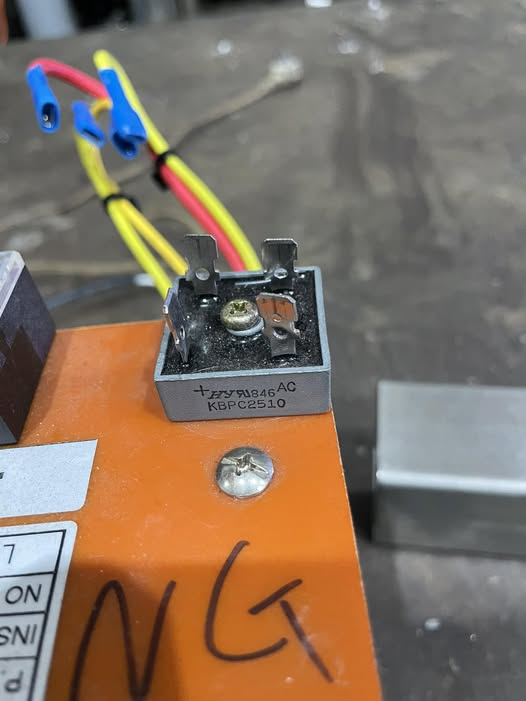
How Bridge Rectifiers Enable Full-Wave AC to DC Conversion
The Role of Diodes in Converting AC to Pulsating DC
A bridge rectifier works by connecting four diodes together in what's called a bridge setup, which turns alternating current or AC into DC that still has those little peaks and valleys. These diodes basically function like traffic lights for electricity, letting it pass through only when there's enough voltage pushing against them. For regular silicon diodes, this happens around 0.7 volts. What makes this whole thing work so well is how these components handle both sides of the AC wave. When the power comes in from the grid, whether it's going up or down, the rectifier keeps directing all that energy in the same direction across whatever device needs it. The result? Instead of getting that back-and-forth current we normally see with AC, we end up with just positive spikes that can be smoothed out later on.
Operation During Positive and Negative Half-Cycles
When dealing with the positive half cycle of AC input, diodes D1 and D2 come into play, basically forming a conducting path that goes from the power source through whatever load is connected and then returns via the bridge configuration. Now when we look at the negative half cycle, it's actually D3 and D4 that start conducting instead, which keeps the current flowing in the same direction through our load regardless of the input polarity. The way this full wave rectification works means the output frequency ends up being twice what we'd get from a simple half wave setup. This has some pretty good effects too since there's much less ripple voltage present, making things run smoother overall. Circuit tests have shown these benefits aren't just theoretical either.
Why Four Diodes Are Used in a Full-Wave Bridge Configuration
A four diode bridge configuration does away with the need for those complicated center tapped transformers, which makes things simpler to build and saves money on components. The balanced arrangement means power keeps flowing no matter what direction the input comes from, getting almost all the juice out of the transformer. When we look at how it stacks up against the old school two diode full wave setups, there's actually around 40% less energy wasted here. That efficiency gain lets engineers pack everything into smaller spaces while still getting great performance out of their circuits.
Modern Simulation Tools for Validating Bridge Rectifier Performance
Engineers leverage SPICE-based tools like LTspice and MATLAB Simulink to simulate thermal dissipation, voltage drops, and transient responses under real-world conditions. These models can test extreme scenarios such as 300% overload for 10ms before physical prototyping, cutting development time by up to 30% and ensuring reliability.
Single-Phase vs Three-Phase Bridge Rectifier Configurations

Design and Application of Single-Phase Bridge Rectifiers in Consumer Electronics
We find single phase bridge rectifiers all over the place in everyday gadgets that don't need much power. Think about those little phone chargers we plug into walls, LED light controllers, even some kitchen appliances. What makes them work so well is this clever arrangement of four diodes that takes regular wall electricity (usually between 120 and 240 volts) and turns it into something our electronics can actually use. The best part? These circuits aren't complicated at all. Most people know that efficiency matters when building things, and these rectifiers hit around 90 to 95% efficiency which is pretty impressive. That's why manufacturers love putting them in products where there's limited room inside the casing and nobody wants to pay extra for bigger components. Just look at how slim modern phone chargers have become compared to what we had years ago!
Three-Phase Bridge Rectifiers in Industrial Motor Drives and Renewable Energy Systems
Three phase bridge rectifiers work with six diodes arranged in a specific configuration that can manage much higher voltages, sometimes reaching up to around 690 volts AC. These setups produce DC output that's significantly smoother compared to single phase systems, typically reducing voltage ripple by about three to five times. Industrial applications really rely on these rectifiers for their performance. Think about things like computer controlled machining equipment, large wind power installations, and electric vehicle charging points where power demands can vary widely between just 10 kilowatts all the way up to 500 kilowatts. Efficiency is critical here too, often needing to stay above 96 percent to be economically viable. Even solar energy plants make good use of three phase rectification technology because it helps maintain stable direct current levels when connecting to the main electrical grid, which is pretty important for consistent power delivery.
| Configuration | Diodes | Typical Applications | Efficiency | Load Capacity |
|---|---|---|---|---|
| Single-Phase | 4 | Chargers, SMPS, IoT devices | 90–95% | <5 kW |
| Three-Phase | 6 | Industrial motors, solar farms | 96–98% | 5–500 kW |
Selecting the Right Configuration Based on Load and Power Requirements
When dealing with loads below 5kW where some ripple isn't a big deal, single phase rectifiers generally give good value for money while still performing adequately. Things change when stability becomes critical though. Applications needing consistent voltage levels, maximum efficiency, or handling over 10kW typically turn to three phase systems instead. These are what most manufacturers and renewable energy installations rely on for their heavier duty needs. Before finalizing any setup, it's smart to check those peak inverse voltage (PIV) specs against what might realistically come through the system. A lot of early failures happen simply because someone overlooked these ratings during installation.
Key Performance Metrics: Efficiency, Ripple Factor, and Peak Inverse Voltage
When evaluating bridge rectifiers, three critical performance metrics determine their effectiveness in power conversion systems: efficiency, ripple factor, and peak inverse voltage (PIV). These parameters influence both operational reliability and long-term costs across applications ranging from consumer electronics to industrial motor drives.
Understanding Ripple Factor and Its Impact on Output Stability
Ripple factor basically tells us how much AC noise remains in the DC output from a rectifier. The lower this number is, the cleaner and more stable the power supply becomes. Most bridge rectifiers have around 0.48 ripple factor, which works well enough for things like microprocessors or communication gear that need pretty clean power. When there's too much ripple though, it starts generating extra heat in whatever components come after the rectifier. Worse still, those voltage spikes can mess up devices that are particularly sensitive to electrical changes. If the system has a ripple factor over 0.6, engineers usually end up adding filters to smooth things out. These filters aren't cheap either, typically pushing project expenses up somewhere between 18 and 22 percent depending on what kind of filtering solution gets implemented.
| Parameter | Bridge Rectifier | Center-Tapped Equivalent |
|---|---|---|
| Typical Ripple Factor | 0.48 | 0.48 |
| Ripple-Induced Losses | 6-9% | 8-12% |
Typical Efficiency of Bridge Rectifiers and Factors Influencing It
Standard bridge rectifiers achieve approximately 81.2% efficiency, outperforming half-wave rectifiers by 40–50%. Primary sources of loss include:
- Total diode forward drop (1.4V for two conducting silicon diodes)
- Transformer copper losses (3–7%, depending on winding gauge)
- Thermal derating at ambient temperatures exceeding 85°C
Efficiency can be improved by 10–15% through optimized diode selection (e.g., Schottky diodes) and proper heatsinking, especially in high-current industrial environments.
Peak Inverse Voltage and Its Effect on Diode Selection and Cost
The diodes need to handle the highest reverse voltage they'll face when working, which engineers call peak inverse voltage or PIV for short. In bridge rectifiers, this PIV value matches up with the peak of the AC input voltage we label as Vm. Most standard diodes rated at 600 volts work fine for regular 240 volt AC systems. However things get different with renewable energy setups that run on 480 volt AC lines. These installations demand diodes rated around 1000 volts minimum, and this jump in specifications can push component costs up anywhere from 35% to 60%. Getting the right PIV rating makes financial sense too since it prevents spending money on overkill components while still protecting against those unpredictable voltage spikes that happen now and then in electrical systems.
Reducing Ripple with Capacitor Filters in Practical Applications
Adding a parallel capacitor at the output reduces ripple by 65–90%, depending on capacitance value, equivalent series resistance (ESR), and load characteristics. A common rule of thumb is to use 1000µF per ampere of load current. Effective filtering enables compliance with stringent ripple requirements (<10%) in medical devices and precision instrumentation.
Common Applications of Bridge Rectifiers Across Industries
Power Supplies in Consumer Electronics and SMPS Designs
The humble bridge rectifier plays a critical role in those switch mode power supplies we see everywhere these days, from our laptop chargers to LED TVs and all sorts of mobile device adapters. Most manufacturers stick with full wave bridge designs for good reason too about 92 percent of all modern SMPS units rely on this configuration. Why? Well, they're pretty efficient actually getting over 80 percent efficiency in most cases, plus they take up less space which is always a bonus. And let's not forget how well they work with those high frequency switches operating at around 100 kHz or so. What really matters though is their ability to turn that standard 120 volts AC coming from wall sockets into steady DC power without any fuss. That's why we find them in almost every household appliance that needs reliable power conversion nowadays.
Industrial Uses in Welding Machines and Motor Controls
Bridge rectifiers play a key role in industrial welding setups by transforming standard 3-phase 480V AC power into direct current ranging from 200 to 600 amps, which helps keep the welding arc steady during operations. According to industry reports from last year looking at around fifty different manufacturing plants, nearly four out of five facilities have adopted this bridge-rectified DC approach specifically for their motor drives. The reason? Better control over conveyor belt speeds is critical in many production lines. Switching to controlled DC instead of regular AC makes a noticeable difference too. Welders report about a third less spatter when using these systems, which means cleaner joints overall and fewer rework issues down the line. For shops dealing with high volume production runs, this kind of improvement adds up fast both in terms of quality and efficiency gains.
Automotive Alternators and Charging System Integration
Today's car alternators come equipped with internal bridge rectifiers that take the 3 phase AC output ranging from 12 to 48 volts and turn it into DC electricity needed for charging batteries and running all sorts of vehicle electrical components. The efficiency rate on these rectifiers typically sits between 88 and 92 percent, which makes a real difference when it comes to keeping batteries healthy no matter what speed the engine is running at. Looking at industry numbers, somewhere around 240 million of these automotive bridge rectifiers made their way out of factories worldwide just last year. This massive production volume has helped push forward improvements in things like electric power steering systems and modern infotainment setups found in most new vehicles hitting dealership lots nowadays.
Solar Inverters and Renewable Energy Pre-Conversion Stages
Bridge rectifiers are essential components in solar microinverters where they help stabilize the variable voltage coming from panels typically ranging around 18 to 40 volts DC before it goes through maximum power point tracking. When looking at larger scale commercial setups, three phase bridge configurations tend to offer better stability on the DC bus line, probably somewhere around 25-30% improvement over those half wave options that many smaller systems still use. These same rectifier designs find their way into wind turbine pitch control applications too. The conversion process there handles pretty hefty voltages like 480 volts AC down to just 48 volts DC, and manages to keep the ripple below about 2%, which is actually quite impressive considering the loads these systems have to deal with day after day.
Bridge Rectifier vs Center-Tapped Rectifier: Design Trade-Offs
Efficiency and Transformer Utilization Comparison
Bridge rectifiers work at around the same efficiency level (about 81.2%) as those center-tapped models, but they actually make better use of transformers. When looking at transformer utilization factors, bridge circuits hit 0.812 while center-tapped ones only manage 0.693. That means engineers can get away with smaller transformers that save money on materials and space. Why does this happen? Well, bridge rectifiers utilize the whole secondary winding throughout both halves of the AC cycle, which basically lets them squeeze out more power transfer than their counterparts. This makes them pretty popular choice when space matters or budget constraints are tight.
Advantages of No Center Tap and Higher Output Efficiency
Eliminating the center tap reduces manufacturing complexity and component count. Bridge rectifiers allow higher output voltages with standard transformers and distribute thermal stress more evenly across diodes, extending lifespan especially in demanding environments like automotive and industrial systems.
Disadvantages: Voltage Drop, Heat Dissipation, and Complexity
When using a dual diode conduction path instead of center-tapped designs, we see a much higher forward voltage drop at around 1.4 volts compared to just 0.7 volts. This makes things less efficient in low voltage applications where losses can range between 5 to 8 percent. For systems handling over 10 amps of current, bigger heat sinks become necessary which takes up significantly more space on the board, probably somewhere between 15 and 25 percent extra room needed. Even with some fancy thermal management tricks available today, working with these four diode setups still creates headaches for technicians out in the field. Diagnosis and repairs take longer because there are simply more components involved, making troubleshooting about 30 percent more complicated than simpler configurations.
Frequently Asked Questions
What is a bridge rectifier?
A bridge rectifier is an electronic device that converts alternating current (AC) to direct current (DC) by using four diodes arranged in a bridge configuration.
Why are four diodes used in a bridge rectifier?
Four diodes are used to allow the bridge rectifier to convert the entire AC waveform (both positive and negative half-cycles) to DC, offering more efficient conversion than simpler rectification methods.
What are SPICE-based tools and why are they used?
SPICE-based tools like LTspice and MATLAB Simulink are simulation programs used to model and analyze electronic circuits, helping engineers predict circuit behavior under various conditions before physical prototyping.
How do single-phase and three-phase rectifiers differ?
Single-phase rectifiers generally use four diodes and are suited for low-power applications, while three-phase rectifiers use six diodes and handle higher power, offering smoother DC output for industrial applications.
What is ripple factor?
Ripple factor measures the AC components remaining in the DC output of a rectifier. Lower ripple factors indicate cleaner and more stable DC output.
What are some common applications of bridge rectifiers?
Bridge rectifiers are used in various applications including power supplies for consumer electronics, industrial motor controls, automotive alternators, and solar and renewable energy systems.
Table of Contents
- How Bridge Rectifiers Enable Full-Wave AC to DC Conversion
- Single-Phase vs Three-Phase Bridge Rectifier Configurations
- Key Performance Metrics: Efficiency, Ripple Factor, and Peak Inverse Voltage
- Common Applications of Bridge Rectifiers Across Industries
- Bridge Rectifier vs Center-Tapped Rectifier: Design Trade-Offs
- Frequently Asked Questions