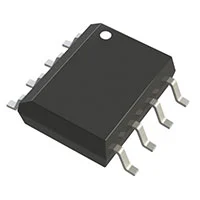
This article provides an in-depth analysis of the key roles of MOSFETs in power management, industrial control, and new energy systems. Combining packaging characteristics, selection parameters, and global sourcing keywords, it is suitable for brand promotion and technology decision-making.
I. Technical Overview: Understanding the MOSFET Architecture
MOSFETs (Metal-Oxide-Semiconductor Field-Effect Transistors) are among the most extensively used power switching components in today’s electronics. Divided into N-channel and P-channel types, they are ideal for voltage-controlled switching, power amplification, and high-speed operations.
Compared with bipolar junction transistors (BJTs), MOSFETs offer lower gate drive losses, higher switching speeds, and superior thermal performance, making them indispensable in DC-DC converters, motor drivers, and battery management systems (BMS).
II. Use Case 1: Main Power Switching in High-Frequency SMPS
In switched-mode power supplies (SMPS), MOSFETs serve as the main switching elements on both primary and secondary sides. N-channel MOSFETs are favored for their low R<sub>DS(on)</sub> and reduced conduction losses, enabling efficient high-frequency buck or boost regulation.
In applications such as fast-charging adapters and LED drivers, where thermal control and efficiency are critical, MOSFETs are indispensable. These components are in high demand across Southeast Asian and Latin American markets.
III. Use Case 2: Motor Drives and Intelligent Industrial Control
In servo drives, electric tools, and AGVs (Automated Guided Vehicles), MOSFETs act as the primary switching devices in H-bridge and three-phase inverter topologies.
Their rapid switching improves PWM signal resolution while reducing motor noise and energy waste, aligning with the stringent noise and stability requirements of smart factories in Europe and robotic control platforms.
IV. Use Case 3: Battery Protection and Power Management Systems
In energy storage systems (ESS), portable devices, and e-bikes, MOSFETs manage battery charge/discharge, offering reverse polarity protection, thermal shutdown, and short-circuit response.
In the increasingly popular residential energy storage units (e.g., Powerwalls) in Europe and the U.S., the bidirectional conduction of MOSFETs forms the backbone of efficient energy feedback and overvoltage protection.
V. Parameter Optimization and Selection Criteria
|
Parameters |
Recommended Range |
|
Drain-Source Voltage VDS |
30V–1000V |
|
Continuous Drain Current ID |
1A–80A |
|
On-Resistance RDS(on) |
< 5mΩ for high-efficiency |
|
Total Gate Charge Qg |
5nC–100nC |
|
Package |
TO-220, TO-252, DFN5060, PDFN5x6, SOT-23, etc. |
Low R<sub>DS(on)</sub> and Q<sub>g</sub> are preferable for efficient power conversion, while DFN packages offer better thermal performance in space-constrained designs.
VI. Future Trends: Integrated Modules and GaN MOSFETs
MOSFETs are evolving toward:
Smart MOSFETs with integrated current sensing (Ideal Diode Controllers)
Power stage modules with built-in gate drivers
GaN MOSFETs with higher frequencies and lower thermal resistance, ideal for 5G, fast-charging, and EV inverters
These trends are reshaping the power electronics landscape over the next decade.

 EN
EN