
 EN
EN
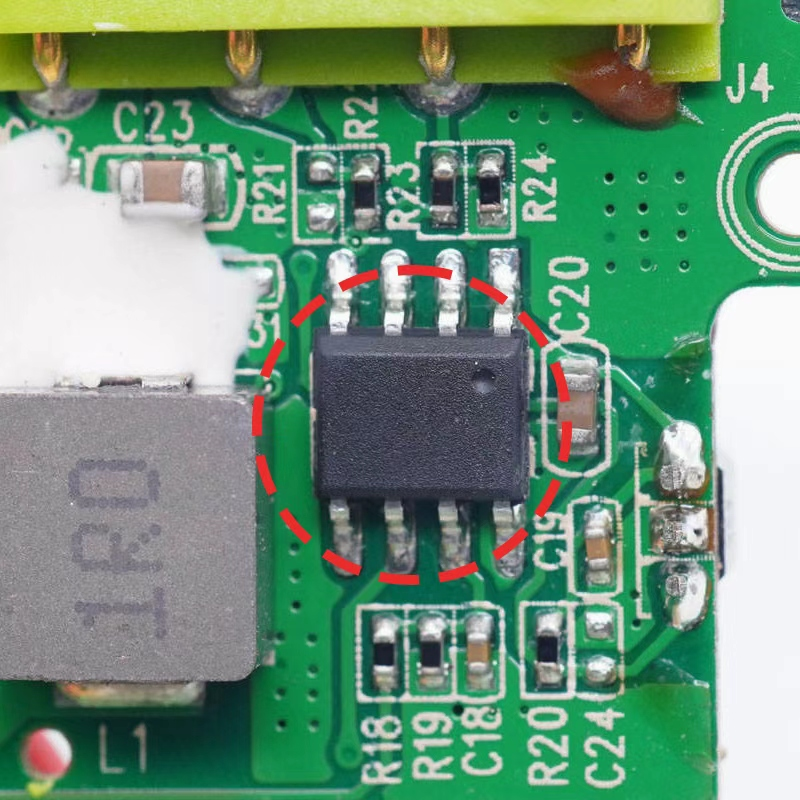
How Gate Voltage Controls Current Flow in MOSFETs
MOSFETs, those Metal-Oxide-Semiconductor Field-Effect Transistors we all know about, basically control how much current flows by adjusting voltage across a channel. When someone applies what's called a threshold voltage, usually around 2 to 4 volts for standard silicon chips, it makes something interesting happen at the gate terminal. This creates this inversion layer right between the source and drain areas which lets electrons actually move through. Now here's where things get really interesting these days. The oxide layer that sits on top? Well, manufacturers have been able to make it incredibly thin now, sometimes as little as 1.2 nanometers thick in the latest technology nodes. And this matters because thinner layers mean the transistor can switch states quicker, but there's a tradeoff too. With such thin layers, the device becomes more sensitive to voltage fluctuations so engineers need to be extra careful about controlling those voltages precisely.
Enhancement vs. Depletion Mode: Key Differences and Use Cases
- Enhancement-mode MOSFETs (90% of modern applications) remain non-conductive at zero gate voltage, making them ideal for safety-critical systems like automotive battery disconnects.
-
Depletion-mode variants conduct by default and are used in niche applications such as analog amplifiers and always-on power buffers.
Silicon carbide (SiC) MOSFETs have expanded depletion-mode adoption in high-voltage industrial drives due to their inherent temperature stability.
Evolution of MOSFET Technology in Power Electronics
From planar designs in the 1980s to today’s trench-gate architectures, MOSFET RDS(on) has dropped 97% (from 100mΩ to <3mΩ at 30V), enabling compact 98%-efficient DC/DC converters. The shift to 300mm wafer production—versus legacy 200mm—cut die costs by 40% while doubling power density between 2015 and 2023.
Integration of Smart Gate Drivers for Improved Control
Modern MOSFETs pair with intelligent gate drivers featuring adaptive slew-rate control (1–50V/ns adjustment), real-time thermal compensation (-2mV/°C bias correction), and short-circuit detection (<100ns response). This integration reduces switching losses by 22% in 1MHz buck converters compared to discrete solutions, according to industry benchmarks.
MOSFETs in Battery Management Systems and DC/DC Conversion
Power MOSFETs for Cell Balancing and Overcurrent Protection in BMS
Battery management systems today rely on MOSFET technology to tackle those pesky voltage imbalances between cells and stop dangerous thermal runaway situations. When charging happens, these power MOSFETs actually shift how electricity flows through the system, allowing for much better balance across all the cells in a lithium ion pack. According to research from Ponemon back in 2023, this active balancing method can extend battery life by around 20% compared to just letting things balance out passively. And if something goes wrong with too much current flowing, MOSFETs kick in almost instantly at the microsecond level to shut things down once currents hit about 150% above what they should be. This fast response protects not only individual cells but also keeps the rest of the electronic components safe from damage.
Case Study: MOSFETs in Lithium-Ion Battery Packs for Electric Vehicles
Looking at what's inside top electric vehicle battery packs in 2023 shows around 48 MOSFET devices packed into each 100 kWh module. These components handle everything from getting the system ready to run safely to cutting power in emergencies when needed. The engineering teams managed to cut down on energy loss by about 12% through clever arrangements with two N-channel MOSFETs working together side by side. They still kept all the safety standards for automotive systems at the highest level (ASIL-D). And there was another improvement too: better integration of the gate drivers helped slash switching losses by roughly 30% whenever drivers hit the gas hard during acceleration. This matters because it directly affects how efficiently these vehicles perform under real world conditions.
Role of MOSFETs in Synchronous Rectification for Power Supplies
When it comes to DC/DC converters, replacing traditional diodes with MOSFETs for synchronous rectification can actually recover around 15% of the power that would otherwise be wasted. Some tests on 1 kW server power supplies demonstrated this effect clearly - efficiency jumped from 92% all the way up to 97% when running at full capacity. That translates to roughly 500 kilowatt hours saved each year just by upgrading a single rack. The latest designs are getting even smarter by pairing MOSFETs with extremely low resistance values (sometimes below 2 milliohms) alongside clever gate timing strategies. These combinations allow for high frequency switching at 1 MHz speeds while still keeping things cool enough to handle without overheating problems.
Maximizing Efficiency Through Low RDS(on) and Switching Optimization
Reducing Conduction Losses with Ultra-Low RDS(on) MOSFETs
Conduction losses in MOSFETs follow P = I² × RDS(on). Modern devices achieve RDS(on) below 1mΩ for high-current applications, reducing wasted energy by up to 60% versus earlier generations (Ponemon 2023). Copper clip bonding and other advanced packaging techniques help maintain cost-effectiveness while achieving these ultra-low resistances.
Case Study: Sub-5mΩ MOSFETs in High-Efficiency Server Power Supplies
Implementation in 48V server power supplies demonstrated 98.2% peak efficiency using parallel-connected MOSFETs with 3.8mΩ RDS(on). This configuration reduced thermal stress by 35% compared to traditional 10mΩ solutions, enabling 30% higher power density without liquid cooling.
How Gate Charge (Qg) Affects Switching Speed and Energy Loss
Gate charge (Qg) determines how quickly a MOSFET switches states; lower Qg enables faster transitions. However, reducing Qg often increases RDS(on). The trade-off is quantified by the switching loss equation:
Switching Loss = 0.5 × Qg × Vgs² × fsw
Where fsw is the switching frequency.
Optimizing Performance Using the Qg × RDS(on) Figure of Merit
When looking at MOSFET performance, the Qg multiplied by RDS(on) value serves as an important benchmark metric. Components that fall below 100nC times milliohms typically show losses under 1 percent when operating at around 500 kilohertz frequencies, which makes these devices particularly suitable for high speed DC to DC conversion tasks. The advantage comes from balancing both parameters rather than focusing on just one aspect. Systems using such balanced parts tend to run about 5 percentage points more efficiently compared to alternatives where manufacturers prioritize only gate charge or resistance separately.
Thermal Management and Reliability in High-Power MOSFET Applications
Managing Heat Generation from RDS(on) in High-Current Designs
Power dissipation follows P = I² × RDS(on), so minimizing on-resistance is essential in high-current designs. A Semiconductor Industry Association study (2023) found that 55% of electronic failures stem from poor thermal management. Modern MOSFETs with RDS(on) below 1mΩ reduce conduction losses by 40% compared to previous-generation devices in EV battery systems.
Junction Temperature's Impact on MOSFET Longevity and Safety
Operating above the 175°C maximum junction temperature accelerates gate oxide degradation, shortening lifespan by 30–40% per 10°C rise. Thermal simulations show proper heatsinking keeps junction temperatures below 125°C during 100A continuous operation, extending device lifetime to over 100,000 hours in industrial motor drives.
PCB Layout Techniques to Enhance Heat Dissipation
| Technique | Thermal Improvement | Cost Impact |
|---|---|---|
| 2oz Copper Layers | 25% better heat spreading | +15% PCB cost |
| Thermal Vias | 18°C temperature reduction | +$0.02 per via |
| Exposed Pads | 35% lower θJA | Requires reflow optimization |
Air vs. Liquid Cooling: Trade-offs for Dense Power Systems
Forced air cooling supports up to 75W/cm² in server power supplies, while direct liquid cooling handles 200W/cm² at the expense of 40% higher system complexity. Phase-change materials are emerging in telecom applications, maintaining MOSFET case temperatures within 5°C of ambient during 30-minute load spikes.
Future Trends: Wide Bandgap Semiconductors and Next-Gen Power Management
Advantages of SiC and GaN Over Traditional Silicon MOSFETs
The new generation of wide bandgap semiconductors like silicon carbide (SiC) and gallium nitride (GaN) are outperforming traditional silicon MOSFETs in several key areas. They deliver better efficiency, switch much faster, and handle heat far better than older technology. Silicon carbide stands out because it can withstand electrical fields about ten times stronger than silicon, which means manufacturers can make the drift layer thinner. This reduces resistance by roughly 40% when dealing with high voltages according to a report from Future Market Insights back in 2023. Gallium nitride has another advantage too its electrons move around so quickly that it can switch at frequencies over 10 MHz, making those bulky passive components unnecessary. Industry analysts looking ahead predict that by 2030, around two thirds of electric vehicle power systems will be using these advanced materials since they work reliably even when temperatures exceed 200 degrees Celsius.
Case Study: SiC MOSFETs in Solar Inverters Achieving >99% Efficiency
Tests in the field have demonstrated that silicon carbide MOSFETs can push solar inverters past the 99% efficiency mark, which is roughly 3 percentage points better than what we see with traditional silicon components. Take a standard 12 kW commercial setup for example SiC tech cuts down those pesky switching losses by around half, meaning companies can get away with heatsinks that take up about 30% less space while still keeping things running at nearly 98.7% efficiency even when demand fluctuates. A recent paper from 2024 suggests these improvements actually mean solar farms collect about 18% more power each year, which obviously speeds up how fast people recoup their initial investment in green energy projects. Not bad for something that sounds so technical!
Hybrid Modules and Cost-Effective Paths to Wide Bandgap Adoption
When it comes to power electronics, hybrid modules that mix SiC and GaN chips with traditional silicon diodes or IGBTs offer a smart middle ground between cost and performance. These combinations can cut overall system costs anywhere from 24% to almost 40%, while still getting most of what makes these advanced materials so appealing. We're seeing them pop up everywhere these days in things like home EV charging stations, big industrial motor systems, and even massive battery storage facilities connected to the power grid. What really stands out about these setups is how much less cooling they need compared to older technologies. For large scale operations running at around 100 megawatts, this translates into savings of roughly seven hundred forty thousand dollars each year just on cooling alone, which adds up pretty nicely over time.
FAQs
-
What are the main advantages of using MOSFETs in power electronics?
MOSFETs offer reduced conduction losses, fast switching speeds, and high efficiency. They're particularly effective in high-frequency applications like DC/DC converters. -
How do MOSFETs contribute to battery management systems?
MOSFETs help balance cell voltages and provide overcurrent protection, ensuring safety and extending battery life. -
Why are wide bandgap semiconductors important in future power management?
Wide bandgap materials like SiC and GaN offer significant efficiency improvements and thermal management benefits over traditional silicon counterparts.
Table of Contents
- How Gate Voltage Controls Current Flow in MOSFETs
- Enhancement vs. Depletion Mode: Key Differences and Use Cases
- Evolution of MOSFET Technology in Power Electronics
- Integration of Smart Gate Drivers for Improved Control
- MOSFETs in Battery Management Systems and DC/DC Conversion
- Maximizing Efficiency Through Low RDS(on) and Switching Optimization
- Thermal Management and Reliability in High-Power MOSFET Applications
- Managing Heat Generation from RDS(on) in High-Current Designs
- Junction Temperature's Impact on MOSFET Longevity and Safety
- PCB Layout Techniques to Enhance Heat Dissipation
- Air vs. Liquid Cooling: Trade-offs for Dense Power Systems
- Future Trends: Wide Bandgap Semiconductors and Next-Gen Power Management
- FAQs