
 EN
EN
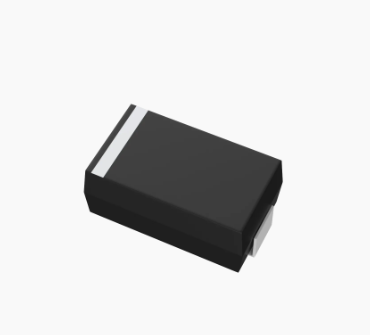
How TVS Diodes Work: Clamping Physics and ESD Compliance
Transient Voltage Suppression: The Core Clamping Mechanism
TVS diodes serve as circuit protectors by utilizing what's called controlled avalanche breakdown. Normally these devices act like nothing is there, offering high resistance so they don't interfere with regular operations. But when something goes wrong and voltage spikes above the breakdown threshold (known as VBR), everything changes within just one nanosecond. The diode suddenly becomes much less resistant, grabbing hold of the excess voltage at a safe level (VC) and sending harmful surges straight to ground instead. Think of it kind of like a safety valve on a boiler - it keeps signals clean while getting rid of dangerous electrical energy. What really makes TVS diodes stand out are their special properties that let them react so fast. This feature is why engineers love them for tricky applications like USB connections, where milliseconds can mean the difference between working components and fried electronics.
IEC 61000-4-2 Requirements and Real-World ESD Immunity Benchmarks
The IEC 61000-4-2 standard sets out what kind of ESD immunity commercial and industrial electronics need to have. Basically, these devices must be able to withstand contact discharges up to 8 kV and air gap discharges reaching 15 kV. TVS diodes help meet these standards because they clamp down on those sudden voltage spikes before they can damage delicate circuits inside equipment. According to some recent testing done back in 2023 by the Ponemon Institute, systems protected with good quality TVS components showed around 70% fewer problems related to electrostatic discharge compared to ones without any protection at all. Real world tests have shown impressive results too. Industrial control systems maintained less than half a percent error rate even when subjected to massive 30 kV ESD events in laboratory conditions. Consumer products managed to hit IEC Level 4 ratings for their ports and connectors, which happens to be the top possible score for immunity against static electricity. For industries like automotive manufacturing and medical device production, this kind of reliable performance matters a lot since electrical interference occurs frequently and often has serious consequences if not properly addressed.
Critical TVS Diode Parameters for Reliable ESD Protection
Clamping Voltage (Vc) and Breakdown Voltage (Vbr): Safety Margins and Timing Accuracy
The clamping voltage, or VC, represents what's basically the highest voltage level that can exist on a protected circuit during those brief electrical surges we all know happen. Then there's breakdown voltage (VBR), which marks when current starts flowing through the protection device. When designing systems, engineers need to make sure that VC stays well under what downstream components can handle. Take standard 5 volt logic chips as an example they typically need protection down around 5.5 volts max. Getting that difference between VBR and VC right matters a lot because it determines how fast the protection kicks in. We're talking about response times measured in fractions of a billionth of a second here since electrostatic discharge events can spike up from nothing to full strength within just 0.7 to 1 nanosecond. Getting these numbers aligned properly makes all the difference when it comes to keeping sensitive electronics safe at those critical interface points where ESD problems tend to occur most often.
VRWM Alignment with Signal Rail Voltages and System-Level DC Integrity
The working reverse voltage (VRWM) needs to be higher than what the system sees under normal running conditions, typically around 15 to 20 percent above the max voltage, to prevent unwanted leakage or false signals when everything's running smoothly. Take a 3.3 volt power supply for example, engineers generally recommend going with something rated at least 3.6 volts. But pushing VRWM too far up the scale actually makes things worse for clamping action, which raises the clamping voltage and slows down how fast the protection kicks in. Field data from automotive CAN bus systems shows that about 4 out of every 10 problems on site trace back to VRWM mismatches. Over months and years, constant exposure to direct current stress quietly wears away at those semiconductor junctions until they fail unexpectedly.
Peak Pulse Power (PPP) and Junction Capacitance (Ct): Balancing Robustness and Signal Integrity
| Parameter | Impact | Design Consideration |
|---|---|---|
| PPP | Determines surge energy absorption capability (e.g., 600 W for 8/20 μs pulses) | Must exceed worst-case IEC 61000-4-2 Level 4 transients (e.g., 8 kV contact ◊ 30 A peak) |
| Ct | Introduces parasitic capacitance that attenuates high-frequency signals | Target <0.5 pF for USB 3.2, HDMI 2.1, and other >1 GHz interfaces |
Optimizing PPP ensures survivability under standardized ESD stress, while minimizing Ct maintains signal fidelity. Designs that balance both achieve <3 dB insertion loss at 10 GHz and full IEC 61000-4-2 Level 4 immunity.
Unidirectional vs. Bidirectional TVS Diodes: Matching Polarity to Interface Architecture
TVS diodes come in two main types: unidirectional and bidirectional. Which one to pick really depends on how the signal path behaves when it comes to polarity. Unidirectional TVS diodes work in just one direction, usually from positive to ground. When there's a negative spike, they act kind of like regular rectifiers. These are great for things where the polarity stays fixed, like most USB connections, UART ports, or those electronic control units we find in cars. On the flip side, bidirectional TVS diodes handle both directions equally well. They clamp voltages symmetrically around ground level, so their orientation doesn't matter much. This makes them perfect for AC power lines, differential communication buses such as CAN or RS-485 networks, and various sensors that send signals back and forth in both directions.
| Feature | Unidirectional TVS Diode | Bidirectional TVS Diode |
|---|---|---|
| Clamping Direction | Single polarity | Dual polarity |
| Polarity Handling | Requires correct physical orientation | Orientation-agnostic |
| Optimal Use Case | DC circuits with fixed polarity | AC/bidirectional signal interfaces |
Misapplication compromises protection: a unidirectional device on a bidirectional line may fail to suppress negative transients, while using a bidirectional variant in a pure DC application adds unnecessary cost and package size without functional benefit.
Step-by-Step TVS Diode Selection Workflow for Production-Ready Designs
From I/O Specification to Datasheet Validation: A Practical Parameter Mapping Guide
Begin by capturing interface fundamentals: operating voltage (e.g., 3.3 V USB), signal bandwidth, and environmental risk profile (e.g., factory floor vs. medical lab). Translate these into six critical selection criteria:
- VRWM: Must exceed maximum DC rail voltage by 15"“20% to prevent leakage
- VC: Must stay below the protected IC's absolute maximum voltage rating during ESD events
- PPP: Must handle worst-case surge energy"”e.g., â—Š600 W for IEC 61000-4-2 Level 4 (8 kV contact)
- Ct: Keep <0.5 pF for high-speed interfaces (USB 3.2, HDMI 2.1, PCIe)
- Response time: â—˜1 ns to engage before semiconductor damage occurs
- Package footprint: Must align with PCB layout constraints and thermal management needs
Validate selections via three-tiered testing:
- Simulation: Confirm clamping behavior and current sharing using manufacturer-provided SPICE models
- Bench validation: Apply calibrated IEC 61000-4-2 pulses while monitoring signal distortion and VC overshoot
- Thermal cycling: Stress devices from "“40°C to +125°C to verify parameter stability across operational extremes
This disciplined workflow bridges datasheet specifications with real-world performance"”preventing costly re-spins and ensuring field reliability from day one.
FAQ
Q: What is a TVS diode?
A: A TVS (Transient Voltage Suppressor) diode is a device used to protect sensitive electronics from voltage spikes and surges, acting like a clamp to divert the excess voltage away from critical components.
Q: Why are TVS diodes important in ESD protection?
A: TVS diodes are critical for ESD (Electrostatic Discharge) protection as they can quickly react to voltage spikes and prevent damage by limiting voltage levels that reach susceptible circuits.
Q: How does one choose between unidirectional and bidirectional TVS diodes?
A: The choice between unidirectional and bidirectional TVS diodes depends on the polarity of the signal path. Unidirectional diodes are suitable for DC circuits with fixed polarity, whereas bidirectional diodes are ideal for AC or bidirectional signal interfaces.
Q: What parameters are key in selecting a TVS diode for a design?
A: Critical parameters include clamping voltage (VC), breakdown voltage (VBR), working reverse voltage (VRWM), peak pulse power (PPP), junction capacitance (Ct), and the ability to handle response times in the nanoseconds range.