Analysis of application scenarios, selection logic, and procurement trends of operational amplifiers and comparators in industrial data acquisition systems.
In any industrial or smart system, the signal path sensor → analog front end → MCU / ADC defines data integrity.
If the signal is distorted before reaching the MCU, no amount of digital processing can recover accuracy.
Operational amplifiers and comparators are among the most underestimated—but most critical—ICs in industrial reliability.
|
Type |
Primary Function |
Key Considerations |
|
Op-Amp |
Amplification, filtering, buffering |
Noise, offset, power supply range |
|
Comparator |
Threshold determination |
Propagation delay, jitter |
|
Instrumentation Amp |
High-precision differential amplification |
CMRR, drift |
|
ADC Driver |
Driving ADC input |
Bandwidth, stability |
Engineers typically evaluate analog ICs based on: Noise densitym, Input offset and drift, Supply voltage range. Temperature stability, Long-term availability.
Operational amplifiers are widely used for:
Sensor signal amplification
Active filtering
ADC input buffering
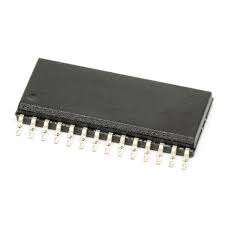
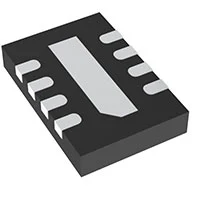
TI LM358DR: Dual op-amps, wide power range, general-purpose model for industrial and consumer applications.
TI TLV9002IDR: Low power consumption, low noise, commonly used in industrial data acquisition modules.
ADI AD8606ARZ: Precision, low offset op-amp, commonly used in medical and industrial measurement applications.
ST TSX321ILT: Low power single op-amp, suitable for battery-powered systems.
These op-amps are widely deployed in Germany, Italy, and Southeast Asia, especially in sensor modules and industrial I/O boards.
Comparators decide:
When protection is triggered
When alarms activate
Whether a system is allowed to start
TI LM393DR: Dual comparator, extremely co mmon in industrial and power systems
ADI LTC1440CMS8: Ultra-low power comparator, commonly used in portable and battery systems
ON Semiconductor LMV358: Low voltage, low power consumption, suitable for compact designs
An industrial temperature acquisition module needs to: amplify weak thermocouple signals, suppress industrial noise, and trigger protection during abnormal temperatures.
Solution architecture: AD8606 for precision signal amplification, LM393 for over-temperature comparison, and the MCU only receives "processed" stable signals.
Results: Measurement accuracy was significantly improved, the false alarm rate decreased, and the system passed industrial EMC testing.
The analog IC market is characterized by very clear features: long lifecycles (10–20 years), low price fluctuations, and industrial projects rarely require frequent model changes.
In markets such as Germany, India, and Vietnam, customers place greater emphasis on batch consistency, original equipment manufacturer (OEM) channels, and long-term supply capabilities.
Digital ICs define system complexity. Analog ICs define stability, accuracy, and manufacturability.

 EN
EN